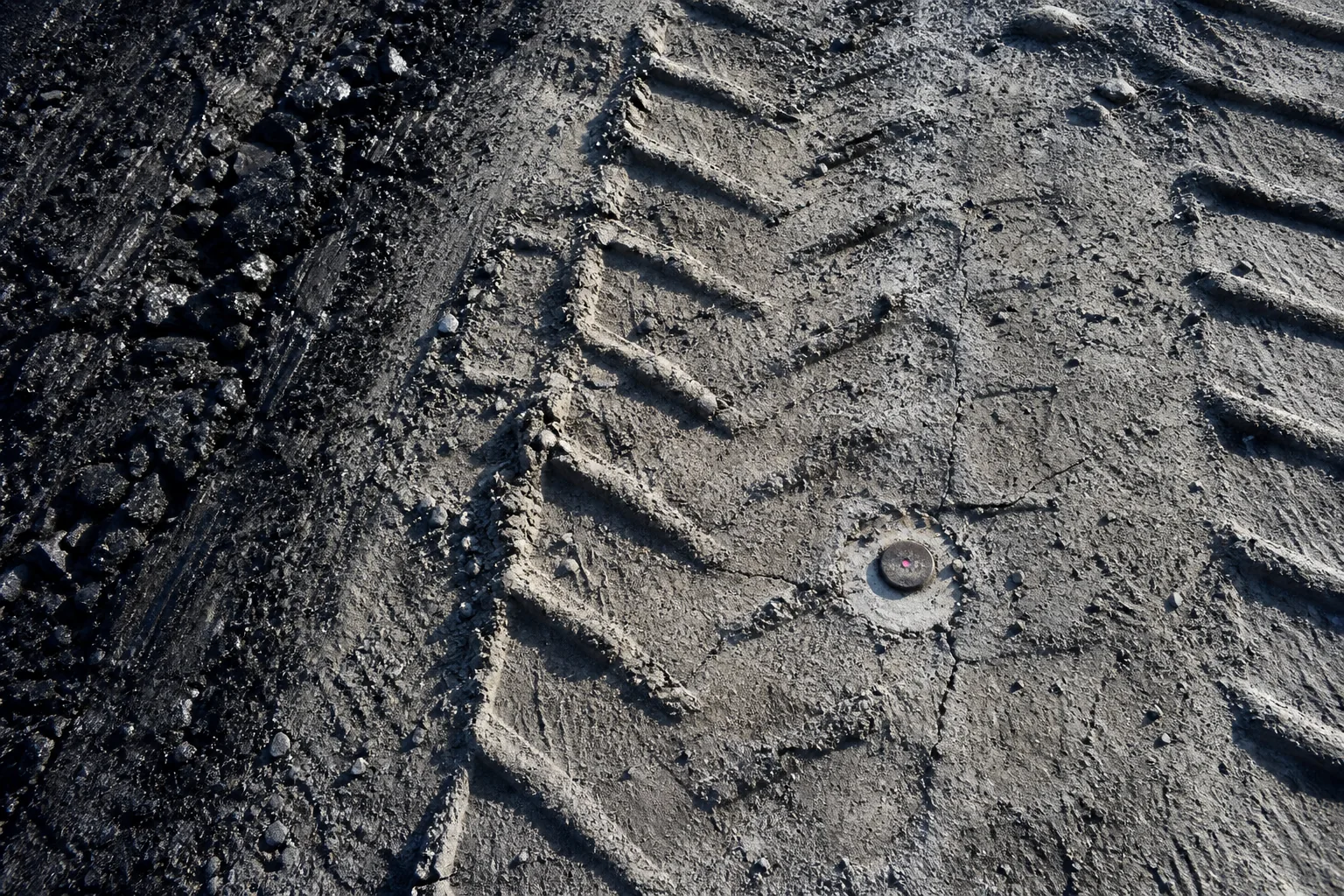
An operating month at a mine is made of physical movements.
Tonnes moved.
Product loaded.
A crew changing shift.
Machinery consuming parts.
A buyer receiving a shipment.
Not as a figure of speech.
At the Jansen potash project near Leroy, a mine schedule is a sequence of material obligations. A shift, a production month, a customer delivery, a payroll, a supplier invoice, a payment to a lender, then another month.
The machinery is not the only thing being designed.
Before a mine produces its first shipment, a financing agreement can already assign part of its future output to someone else.
In the Warintza package of 2023, copper and molybdenum offtakes covered 20% of production for 20 years from the start of production.
The metal had not been mined.
The claim was real.
This is not money sitting outside the mine.
It is an instruction to the mine’s future operating system.
What production has to become.
Who receives it.
When cash can move.
Which remaining cash is available for construction, debt service, wages, procurement, taxes, sustaining work and closure.
Finance is usually imagined arriving after the engineers have designed a mine.
It does not arrive after.
It selects which version of the schedule can survive.
A financeable mine is a claim about time
A deposit is not financeable because it contains a commodity.
A sponsor has to turn it into a bounded proposition: title and corporate structure, technical basis, development plan, environmental and social work, cost and schedule assumptions, permits for the funded work, and a use-of-proceeds budget.
A lender asks whether defined money, spent on defined work, reaches a credible next financing milestone or operating cash flow.
That is a narrower question than whether there is ore.
Warintza also shows why the record keeps moving.
Tens of thousands of metres of infill drilling were run to support resource-category upgrading.
More evidence can strengthen the technical case.
It can also reveal more capital, more time, or more uncertainty before production.
The funding case changes with the geology and with the schedule the geology supports.
A headline raise therefore says remarkably little by itself. The Warintza package combined a senior secured term facility with an equity subscription and a further equity commitment.
That was a capital stack, not three unrelated cheques. Each agreement had to fit the same project entity, the same collateral, the same conditions and the same later-financing permissions.
Financial close is not full availability.
Before a draw, a lender can require corporate approvals, enforceable security, legal opinions, a clean default record, budgets, technical reports, permits, and proof that equity arrives in the agreed order.
Money may sit in controlled accounts and move only against a milestone or an invoice.
The schedule acquires a financial gate.
A plant package can be technically ready to order and still wait for a condition that governs the draw.
The distinction carries to Saskatchewan.
At Jansen, the question is not merely what the potash body can yield. It is what a verified financing package permits the project to spend, build, commission, sell and retain at each point in time.
The particular Jansen terms need primary evidence.
The mechanism does not.
A contract removes metal before production
An offtake is usually described as a sales agreement.
That is true at the wrong scale.
It is also a financing instrument, because it gives a counterparty a defined position in future production. The Warintza offtakes ran for twenty years from the start of production, making a claim on the mine’s revenue channel long before its first delivery.
But twenty per cent of what?
Contained metal, payable metal and refined metal are different commercial objects. Treatment charges, refining charges, penalties, shipment nominations, termination rights and priority against another claim all determine what cash remains after the sale.
A model that writes twenty per cent of gross revenue can be wrong even when its percentage is exact.
That is why a contract on sales changes the next financing. A new lender, buyer or streamer has to inspect its term, security, termination mechanics and priority, because all of them seek payment from the same production.
The first agreement has reached forward and narrowed the field the second agreement can operate in.
At Warintza the constraint had a price.
A defined change of control before a stated anniversary of the senior loan could trigger a substantial payment against each offtake.
The sum is not an operating cost.
It is a contingent cash flow that can decide whether an acquisition, an asset sale or a refinancing closes.
The mine has become a set of promises before it becomes a set of shipments.
Instruments divide one flow
Senior debt claims cash by date.
Its lender can require interest, principal, reporting, covenant tests and security. Equity absorbs more risk and takes distributions after senior claims, and it dilutes ownership.
An offtake changes a sales channel.
A stream purchases metal under its own formula.
A net-smelter-return royalty claims revenue as its agreement defines it.
These instruments do not sit beside production.
They redistribute it.
Solaris later entered a gold-stream and royalty arrangement and used the proceeds in part to repay the senior loan.
The transaction exchanged a scheduled creditor claim for a longer claim on metal and revenue. It could relieve near-term debt-service pressure while reducing the project’s share of later price upside.
The stream made the alteration exact.
The buyer was to receive 20 ounces of gold for every million pounds of copper produced in the defined area, paying 20% of spot until a delivery threshold was met and 60% afterward.
The royalty began below half a per cent of net smelter return and could step up annually under stated conditions.
The calculation does not disappear into the model.
Each delivery needs attributable-metal records and a contract-price calculation.
A streamed ounce is not an ounce sold freely at spot.
Neither is the upfront deposit sales revenue.
Refinancing therefore takes more than announcing repayment.
At Warintza the earlier offtakes had to be amended to permit the later financing. Security, metal claims, areas of interest and payment waterfalls had to be reconciled first.
A mine can be profitable on paper and unable to rearrange the contracts that divide its proceeds.
Valuation keeps its assumptions attached
Mine finance begins with a time series, not a headline. Each period carries tonnes, grade, recovery, payable metal, price, sales deductions, operating cost, capital spending, tax and finance claims. What remains may be free cash flow under the model’s stated definition.
The critical phrase is under the model.
The capital categories arrive at different times and do different work. Warintza’s study listed initial capital of about US$3.7 billion, sustaining capital of about US$1.7 billion, and a separate closure provision.
Those are not interchangeable totals.
Initial capital bridges the gap before production.
Sustaining capital keeps later production possible.
Closure capital arrives at or after the end of production and creates no new sales.
A plan with a smaller opening number can be worse if it moves necessary work into an early operating year, where it competes with debt service, distributions and a production shortfall.
Operating cost needs the same discipline.
A cost per tonne milled and a cost per tonne of material moved do not answer for each other’s denominator. The same model carried billions in concentrate freight, treatment, refining and other deductions, and further billions in royalties.
Metal production becomes distributable cash only after such claims.
Net present value and internal rate of return answer different questions. Net present value discounts stated future free cash flow to a stated date at a chosen rate. The rate of return is the rate that reduces the modelled value to zero.
Warintza reported a post-tax value at an 8% discount rate, a post-tax return in the mid-twenties, and a payback of well under three years after a three-year construction period.
These are not conclusions waiting to be repeated.
They are outputs from a price deck, a tax basis, an exchange-rate convention, a capital schedule, a working-capital treatment and a closure assumption.
Payback also discards much of what happens after recovery, and normally ignores discounting. A project can have an attractive return and a smaller present value than a larger project. It can have a short payback and a weak late-life obligation.
The number is not the mine.
It is the mine after a particular set of assumptions has passed through it.
Estimate range becomes bargaining power
An estimate with many digits can still have incomplete scope. Its basis has to hold quantities, unit rates, quotations, allowances, escalation, foreign exchange, taxes, freight, labour productivity and contingency together.
A cost range is not an embarrassment to be edited away. It is information about the stage at which finance is being asked to take risk.
Warintza described its capital estimate as AACE Class 4, with targeted accuracy of minus 20% to plus 30%. The range does not mean every line receives an automatic surcharge.
It records estimate maturity and unresolved scope.
The sensitivity work moved commodity prices, operating costs and initial capital by a fifth in each direction, and found the copper price most influential.
The real cascade is temporal.
An overrun can consume contingency.
A delay can defer revenue.
Deferred revenue can increase interest during construction.
A covenant can then tighten, an equity call can arrive, and the sponsor may end up negotiating at the moment its need for money is most visible.
The technical schedule has not merely slipped.
Its ownership and its future cash share may have changed.
This is why a downside case asks more than whether the present value stays positive. It asks whether the package still covers cost to complete, debt service and the operating ramp required to make the claims credible.
A financing package is a test of a mine design under bad weather in the model.
A community receives the schedule
A community does not experience a post-tax valuation.
It experiences the arrival and departure of work.
The money can pass through wages, procurement, agreement payments, taxes, capacity funding, equity and closure work.
These are not one thing.
A contract’s gross value is not local retained value. A payment to an Indigenous government is not a payment to every household. Capacity funding pays for informed participation and does not buy consent.
The implementation work begins before operating cash flow.
Saskatchewan’s consultation framework gives 6 calendar days for written notice at the lower levels after a completed permit application, 14 days at the highest, and 30 days for an intent-to-participate confirmation and a consultation-funding application.
Those administrative windows do not make an agreement.
They do make early information and capacity part of the project timetable.
Once a project moves forward, commitments need owners, budgets, due dates and evidence. The corpus records more than 300 mining impact-benefit agreements signed between 1974 and 2015, while noting that most terms stay confidential and commonly address preferential employment and training.
A signature is not the operating system.
Hiring, transport, apprenticeships, procurement forecasts, payment terms and dispute resolution determine whether an agreement works in the months it names.
This is where finance reaches past the balance sheet. A lender’s milestone, a streamer’s delivery formula or an offtake’s shipment definition can shape the production sequence.
That sequence shapes when a contractor hires, whether a training pathway leads to a vacancy, and how long a local business can rely on a scope of work.
The causal chain is not sentimental.
It is contractual.
Closure is inside the schedule
Closure starts when the production profile begins to decline, not when the last shift ends.
Workforce representatives, suppliers, local governments, rights holders and the operator need a transition table.
Final operating dates by department and contract.
Transferable skills.
Supplier exposure.
Municipal-revenue effects.
Post-closure roles.
Without it, a mine’s ending arrives as a series of surprises that were visible in the schedule.
The Highland Valley Copper assessment in the community corpus gives the shape rather than a template. A closure phase of about a decade after operations.
A couple of hundred workers for the first few years, then a small long-term site-management and security crew. Most of the closure spending in the first five years, and the remainder spread across the following century.
That money is real.
It is not an operating mine in another form.
Decommissioning can buy earthworks, demolition, trades, monitoring, security and water management. It does not replicate production employment or a mine-centred supplier base.
In the same assessment, ending existing operations removed hundreds of millions in annual labour income and thousands of full-time-equivalent jobs across the province. Local effects differed, because workers lived in different places.
The useful measure is transition exposure.
The share of household income, business revenue, municipal revenue and employment that ends with mine activity.
A contractor able to serve utilities, construction, forestry or another mine carries less exposure than one built for a single site’s roster and specifications.
Training, procurement and payment structures can turn temporary cash into portable credentials, another customer base or durable community assets.
They cannot make a finite mine infinite.
What needs verification at Jansen is the particular package and its particular commitments.
The general truth is already clear.
Every claim on the mine reaches into its schedule. Every change in that schedule reaches employment, procurement and the long preparation for a community’s transition.
Finance does not fund a finished mine.
It changes the mine that can be finished.